
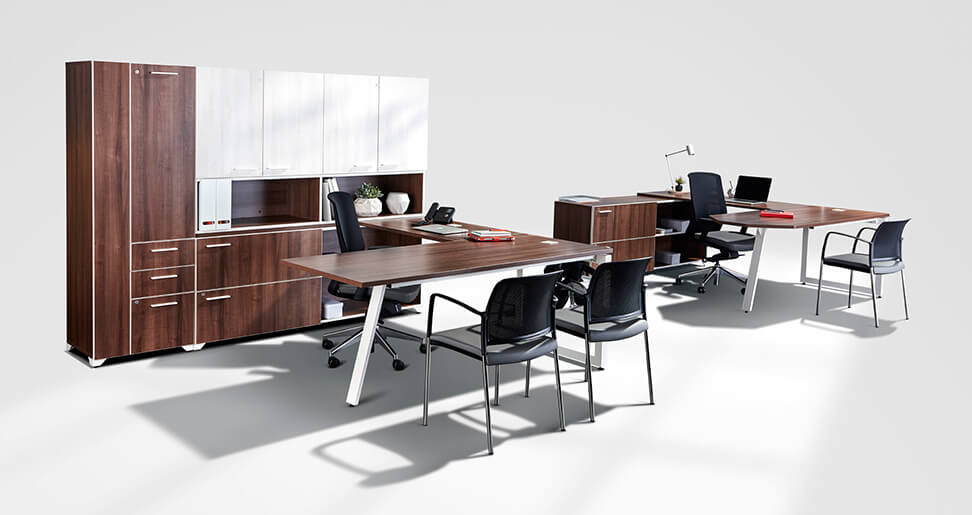
As workplaces continue to evolve, businesses must rethink how offices support productivity, collaboration, and employee well-being. As 2026 comes into focus, we are noticing that office design is less about rows of desks and more about creating the right spaces for our clients that reflect company culture, support flexible work, and improve the overall employee experience. Smart businesses are investing in smarter layouts, better materials, and more thoughtful design to help their teams perform at their best. A well-designed office space can increase team positivity, energy, and output.
Based on our experience and expertise, here are some of the top office design trends we see that are shaping workplaces in 2026.
Flexible and Multi-Purpose Spaces
One of the biggest shifts we are seeing in office design is flexibility. Many organizations now use spaces that can quickly adapt to different needs throughout the day. A meeting room in the morning might become a collaborative workspace in the afternoon or a training area later in the week.
At Inspired Business Interiors, we specialize in modular furniture, movable walls, and adaptable layouts that make it easier for our clients to maximize their space while accommodating hybrid work schedules. This flexibility helps offices stay functional even as team sizes and working styles change.
Private Spaces for Focus
While open-concept offices remain common, many businesses still require quiet areas for focused work. Many offices are incorporating soundproof booths, privacy pods, and smaller focus rooms that can be easily adapted into any floor plan.
Privacy spaces allow employees to step away from distractions when they need to concentrate, take calls, or participate in virtual meetings. Finding the right balance between collaboration and privacy has become a key element of effective office design. At Inspired Business Interiors, we have extensive expertise with helping offices in Winnipeg find that perfect balance!
Natural Materials and Biophilic Design
In 2026, office spaces are continuing to embrace natural elements. Designers are using materials such as wood, stone, and textured fabrics to create warmer and more welcoming environments.
Biophilic design — incorporating nature into the workplace — remains a strong trend. Indoor plants, living walls, natural lighting, and organic design elements help create spaces that feel less corporate and more comfortable. Research has shown that exposure to natural elements can improve mood, reduce stress, and increase productivity.
Technology-Integrated Workspaces
Technology has become an increasingly integral component of office design. Today’s workplaces need to support seamless video conferencing, wireless connectivity, and collaborative digital tools.
Inspired Business Interiors is actively integrating technology directly into furniture and meeting spaces with built-in power, charging stations, and integrated displays. Smart meeting rooms that support both in-person and remote collaboration are becoming standard in many offices.
Employee Wellness and Comfort
Employee well-being is a major priority for companies designing new offices. Ergonomic furniture, sit-stand desks, improved lighting, and better air quality are all part of creating a healthier workplace.
Some offices are also incorporating wellness rooms, quiet spaces, and comfortable lounge areas where employees can take breaks or recharge during the day. These features help reduce fatigue and support long-term employee health.
Branded and Personalized Spaces
Companies are increasingly using office design to reinforce their brand identity. From custom wall graphics and color schemes to unique architectural features, offices are being designed to reflect a company’s personality and values.
These personalized spaces not only create a strong impression for clients but also help employees feel more connected to their workplace.
As businesses continue adapting to new ways of working, thoughtful office design will play an important role in attracting talent, supporting productivity, and creating spaces where people actually want to spend time. For companies planning updates or new builds in 2026, focusing on flexibility, technology, and employee well-being will be key to creating a successful modern workplace.